Start at the site
Identify the devices, networks and information available at each remote location.

Bring remote-site information into a wider application architecture. Evaluate local acquisition and a central communication layer as parts of one deployment.
Start with the information you need, the system it comes from and the application it must serve.
Identify the devices, networks and information available at each remote location.
Design the connection between local acquisition and the central communication component.
Select the client interface and application context needed by the wider system.
Use this relationship to frame the technical discussion. Exact module placement and capabilities depend on the selected product and version.
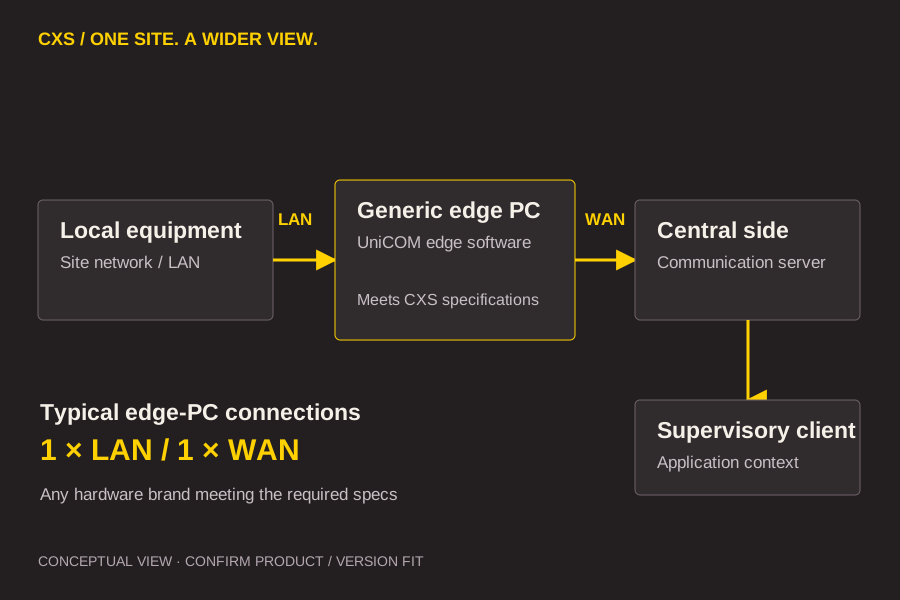
A distributed project brings together local equipment, network responsibilities and supervisory requirements. Establish those boundaries before choosing the rollout pattern.
Use these questions to shape a focused technical evaluation.
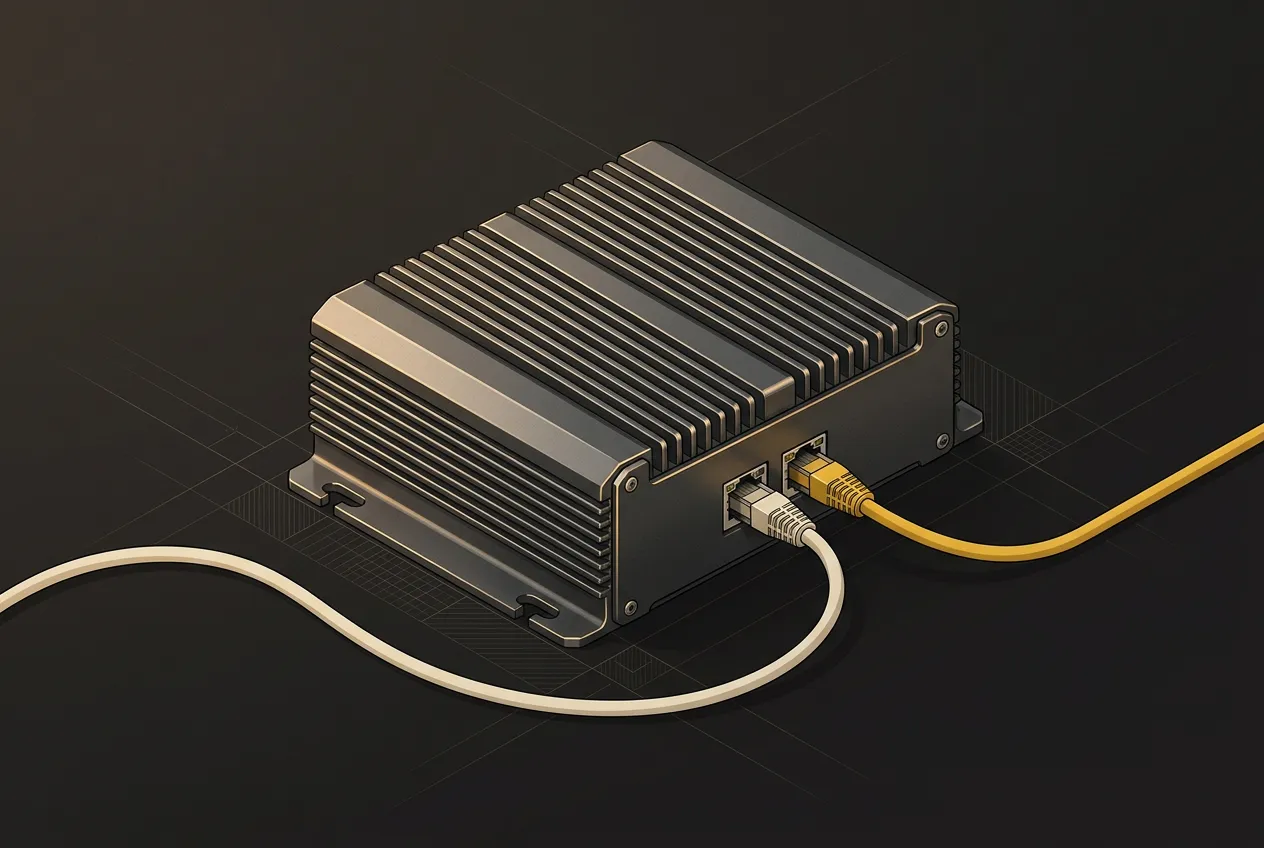
UniCOM runs on an edge PC of any brand that meets the required specifications. A typical configuration uses one LAN connection for the local network and one WAN connection toward the central system. Confirm hardware, operating-system and network requirements for the selected release.
Some capabilities in the legacy material are marked R2. Confirm what is available now; do not treat roadmap features as delivered behavior.
Review network separation, access control, connectivity loss, updates and data handling with the technical owner. Security properties depend on the deployed configuration.
Tell us what you are connecting, the platform you use and the work you need to do.
Discuss your project